


New
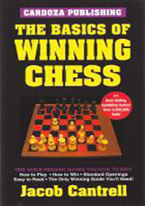

Basics Of Winning Chess
$4.95
Nine informational chapters and 22 diagrams show beginning players how to play and win at chess in one quick and easy reading. Youll learn the moves of the pieces, the rules and principles of play, the standard openings, as well as chess notation. Also introduces the basic concepts and strategies of middle and endgame play. 64 pgs, paperback, 2002
9 in stock
Description
Nine informational chapters and 22 diagrams show beginning players how to play and win at chess in one quick and easy reading. Youll learn the moves of the pieces, the rules and principles of play, the standard openings, as well as chess notation. Also introduces the basic concepts and strategies of middle and endgame play. 64 pgs, paperback, 2002
Additional information
| Weight | 0.4 lbs |
|---|
Shipping & Delivery
- Fast Processing: In-stock orders placed by 1:00pm PT ship within 2 business days. Our crew ships Monday–Friday.
- Custom & Special Orders: Production times vary. See the description above for specific lead times. Rules and transit times apply once production is complete.
- Reliable Carriers: We ship via USPS and UPS to ensure your gear arrives safely.
- Estimated Delivery (U.S.): Generally 3–7 business days for the contiguous states; 4–28 days for AK, HI, and territories.
- Full Details: For international rates, customs info, and specific shipping claims, view our full Shipping Information page.
- Returns: Easy returns for 30 days on new, unused stock products. Check our Returns & Refunds Policy for eligibility and instructions.
Related products
Sold out New
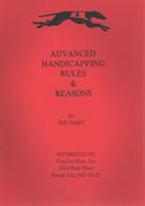
Advanced Handicapping Rules & Reason
Two dozen ideas, angles, methods for the more knowledgeable greyhound bettor. Includes why the one-eighth call is the key to winning races; importance of learning the grading rules at tracks; how actual distance of each course pays off; dogs shipped in from other tracks; separating two dogs with similar abilities and records; evaluating the previously laid-off dog. 16 pages, paperbound. No date.
New
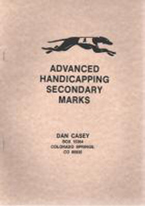
Advanced Handicapping Secondary Marks
Understanding how to mark the program will make a difference between losing and winning. The suggestions of how to mark your program in this book refers to any mark to help you correctly make a wagering decision. Casey covers the middle-box break problem dog; class dog gone bad; identifying a 'checker'; an overbet dog; double dropdown dogs. 21 pages, paperbound.

Sold out New
All Against The Law
Subtitled "The Criminal Activities of the Depression Era Bank Robbers, Mafia, FBI, Politicians, & Cops". Here for the first time is the complete story of the careers and lives of the four successive Public Enemies Number One who were the most dangerous machine-gun toting Midwestern bank robbers of the early Depression years - John Dillinger, Baby Face Nelson, Pretty Boy Floyd and Alvin Karpis with the Barker brothers. Besides being complete this presentation is wholly different from previous histories because for the first time the newspaper article accounts of these gangsters' activities are included. These were written by reporters from interviews of the eyewitnesses at these events, police and detective descriptions of the handling and findings of their investigations, and the trial testimonies of both the criminal cohorts and also the people who harbored these killers during their long fugitive manhunts. These facts were merged with the FBI agents' internal reports sent to Washington Headquarters that frequently admitted or confirmed their misconduct, as well as the many other documents used by previous crime historians. All this information combines to present the first complete timeline of these criminals' actions and personal lives as each fugitive alternated between hiding in a safe haven and staying on the run often just ahead of determined lawmen. Just as a movie is made up of many individual pictures that are flashed one after the other to produce the action, the many individual facts collected about each of these incidents create a dramatic step-by-step flow that produces an incredibly exciting and fast-moving adventure story. Interspersed throughout these Public Enemies Number One manhunts is the transformation of the Federal Bureau of Investigation from an accounting department of government money into a national police and detective agency. This is by far the most penetrating story of how J. Edgar Hoover took this group of politically-appointed accountants and attorneys, who by law could not carry guns or make arrests, and turned them into a full-fledged criminal detective agency. Hoover's leadership of the FBI has been discredited by numerous previous scholars, but this book goes much further in presenting how poorly-trained the agents were in police and detective procedure, the lack of respect they had for individual liberties and rights and their total disregard for the safety and well-being of the civilians who unintentionally appeared in their paths. Previous historians have usually described the actions of Hoover's FBI as like Keystone Cops or repeatedly referred to agents' actions as "inexplicable." But Hoover's agents' behavior was the direct byproduct of their Director's leadership and training procedures. After the reader learns the capabilities and values of Hoover's agents, their actions are neither funny nor baffling but instead very predictable. As each confrontation develops, the reader can sense how the situation can go terribly wrong as these courageous but ill-prepared early agents headed into what would likely become another failed raid or else produce disastrous results for the lawmen or innocent civilian bystanders caught up in the lines of fire. The mismatch between the skills of Hoover's early agents and the killers they went after could not have been more stark. These untrained agents went after the most aggressive and dangerous killers in history. These were not the typical variety of criminal who tries to escape when pursued by the police. Whenever these killers started to feel trapped or pressured, they would turn about face and run on foot out in the open, or whirl their car around as they floored the accelerator, charging their pursuers while blasting away with machine-guns. All this aggressive determination made Dillinger, Nelson, Floyd, and Karpis and the Barker brothers dreadfully successful at killing more policemen and FBI agents than any other American outlaws. Index 328 Pgs. 2013
Sold out New
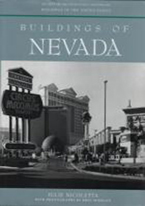
Buildings Of Nevada
A part of the Oxford University Press series on Buildings of the United States, an ambitious history of the architectural riches of the states. Covers every part of Nevada, including 400 architecturally and historically significant structures of every type: courthouses, schools, churches, casinos, homes, hotels, mines, forts, ranches and more. Many photos by Bret Morgan, survey maps, and aerial photos. 312 Pgs. Hardcover 2000
Sold out New
Cheating Is Encouraged: A Hard-Nosed History Of The 1970s Raiders
Straight from the mouths of the legends of the Silver and Black, Cheating Is Encouraged recapitulates the many infamous stories from the last team to play “outlaw” football. Regardless of whether you loved them or hated them, the Oakland Raiders of the 1970's were an amusing cast of outlaws, misfits, and anomalies that made up one of the greatest pro football teams of their era. The Raiders’ roster consisted of a collection of mavericks and rebels, some with behavioral issues, such as John “Tooz” Matuszak and Lyle Alzado, as well as castoffs like the aging George Blanda and the sandlot player Otis Sistrunk, who were passed over or disregarded by other NFL teams. To say that this group of outlaws had “attitude” would be a gross understatement. They were the Oakland Raiders, the Silver and Black, and Al Davis’s dream of “Just win, baby.” Gridiron characters (such as the Snake, Foo, the Assassin, the Hit Man, Dr. Death, and many others) chronicle the notorious on and off-the-field exploits, away-game adventures, and the party-hard attitudes that are reflected in the team’s intimidating and glorified mix of renegades. Cheating Is Encouraged defines an era that can only be considered the last days of “real football played by real men.” 304 Pgs. 2017
Sold out New
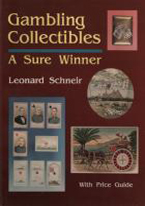
Gambling Collectibles
Gambling, simply stated, is as American as baseball, hot dogs, and apple pie. Despite the best efforts of our Puritan fore-bearers, America has, throughout its history, been a country of rebels and gamblers. The games - faro, poker, keno, hazard, roulette, and others, have produced objects that are highly collectible and valued by a growing number of aficionados. This wonderful new book explores the world of gambling collectibles in a way that will inform and amuse both the novice and the established collector. A myriad of gambling items are illustrated in over 400 full-color photographs. Included are some that are very rare and some that are not, but all of them are exceedingly attractive. They have about them an aura of romance and intrigue. In addition there is substantial text, helping the collector to put the items in a historical context as well as giving very practical information about building a collection.160 Pgs. 1997
Sold out New
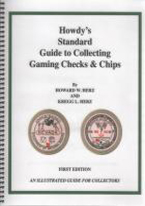
Howdy’s Standard Guide To Collecting Gaming Checks & Chips
Begins with a definitions, distinctions and a short history of gaming checks and chips with a chronology of development, manufacturing styles and composition. Later sections include illustrations of checks and chips. Illustrations include manufacturer's individual designs and groupings, colors and monogram styles. Information on dating and pricing chips and a list of check mold descriptions and codes. 66 Pgs. 2008
Sold out New